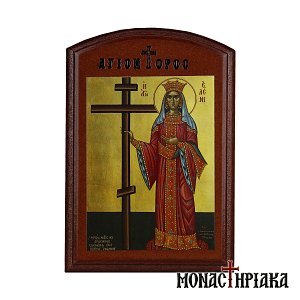
Small icon (lithograph) of Saint Maximus, on hard MDF with matte varnish.
Dimensions: 7 x 12 cm.
Short life of Saint Maximus the Confessor
Saint Maximus was born in Constantinople around A.D. 580 into a distinguished and affluent family. From an early age, he devoted himself to learning, studying both theology and philosophy, and became renowned for his exceptional education and intellectual gifts. In the early years of his public life, he served Emperor Heraclius as an imperial secretary. Despite the prestige of this position, he chose to leave the imperial court, drawn instead to the ascetic life and to the defense of the Orthodox faith as it had been handed down by the Church. He entered monastic life, where he dedicated himself to prayer, theological study and spiritual discipline. During a period of intense doctrinal controversy, Saint Maximus became one of the foremost defenders of Orthodox teaching against the heresy of Monothelitism, which claimed that Christ possessed only one will. Refusing to compromise the truth of the faith, he remained steadfast despite immense political and ecclesiastical pressure. His unwavering confession of the faith brought severe persecution. He was imprisoned, subjected to brutal torture, and ultimately mutilated, yet he never renounced his beliefs or abandoned his witness to Christ. After enduring many years of suffering, he died in exile, sealing his testimony through perseverance and faithfulness. The Orthodox Church commemorates Saint Maximus the Confessor each year on 21 January.